Why Isn’t My Baby Sleeping? Understanding Your Newborn’s Rhythms
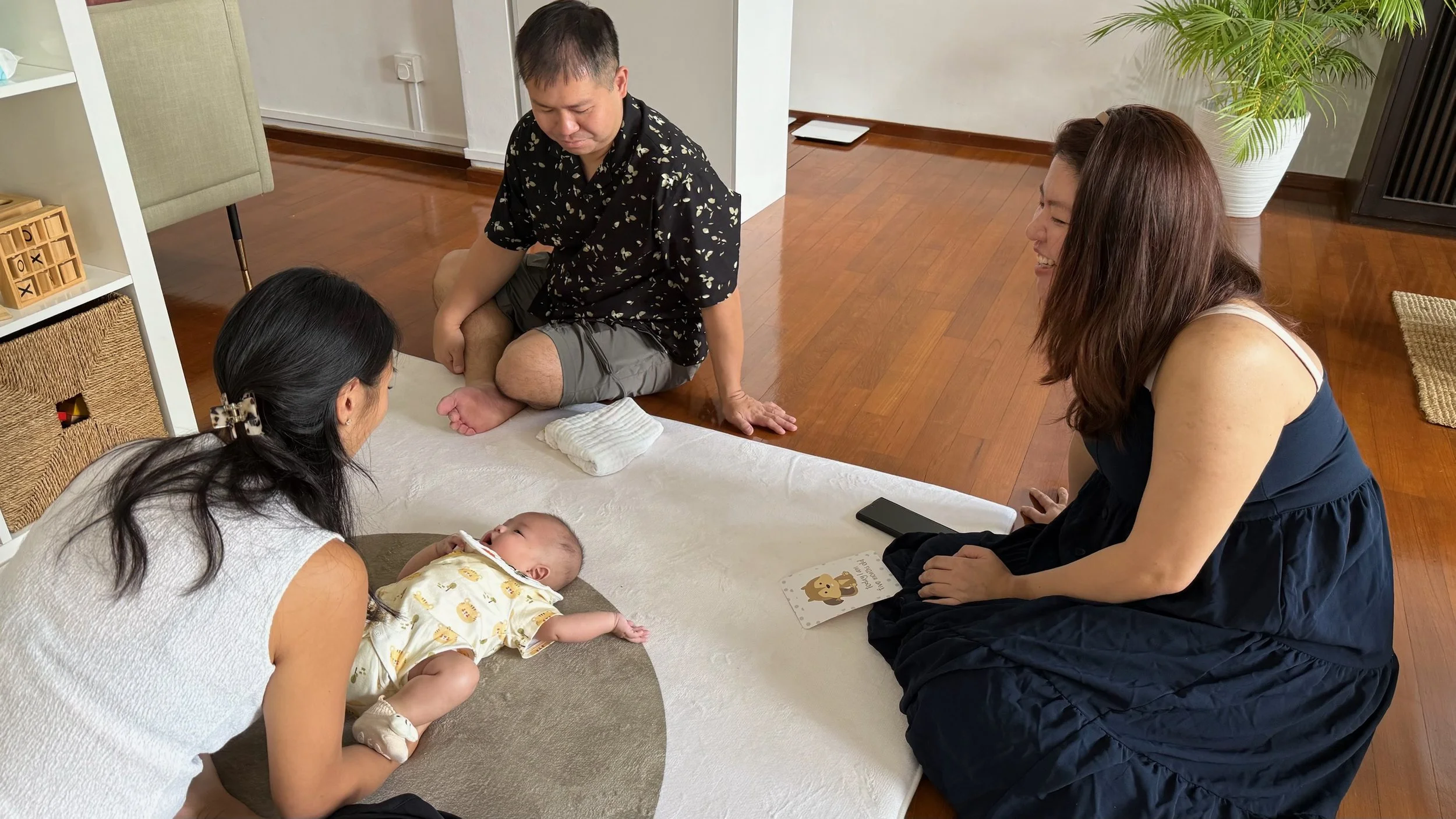
There is a particular kind of exhaustion that comes with early parenthood.
It’s quiet. Layered. Sometimes confusing.
You expected broken nights, but not quite like this.
Your newborn wakes often, settles briefly, then wakes again. You try feeding, rocking, holding, changing… and still, sleep feels just out of reach.
At some point, the question comes:
Why isn’t my baby sleeping?
And beneath that question, often something deeper:
Is something wrong?
Let’s gently reframe this.
Because in many cases, your baby isn’t “bad at sleeping.”
They are still learning how.
Understanding newborn sleeping patterns
Newborn sleep is not meant to look like adult sleep.
In the early weeks, babies cycle through lighter and deeper sleep more frequently. Their nervous system is still developing, and their internal rhythms are not yet fully established.
This means:
Short sleep cycles (often 40–60 minutes)
Frequent waking, especially for feeding
Day–night confusion in the beginning
A strong need for proximity and contact
These sleeping patterns are not a flaw. They are part of early development.
Your baby is adapting to life outside the womb and learning how to regulate, settle, and feel safe in a completely new environment.
When sleep feels harder than expected
While variation is normal, some babies seem to struggle more than others.
You might notice:
Difficulty settling, even when tired
Frequent waking shortly after being put down
Restlessness during sleep
Preference for being held constantly
Crying when placed on their back
This is often where frustration and concern begin to build.
And this is also where we begin to look a little deeper.
Sleep is not just about sleep
A baby’s ability to sleep is closely connected to their nervous system.
Sleep requires a shift into a more settled, restorative state.
But if the nervous system feels overwhelmed or unsettled, this shift can be harder to access.
This can happen for different reasons:
1. The transition from womb to world
In the womb, your baby experienced constant motion, warmth, and containment.
After birth, everything changes.
Light, sound, space, gravity. These are all new inputs.
Some babies adapt quickly. Others take more time.
And during that time, sleep may feel more fragmented.
2. Physical tension in the body
Birth is a significant physical event for a baby.
Whether fast or long, assisted or unassisted, it can create areas of tension, particularly around the neck, spine, and shoulders.
This tension can influence:
Comfort when lying flat
Ease of turning the head
The ability to settle into sleep
A baby who feels physically uncomfortable may find it harder to stay asleep.
3. Immature regulation
Newborns rely heavily on external support to regulate their state.
They borrow calm from you through touch, voice, and presence.
If their system becomes easily overwhelmed, they may need more support to settle, and may wake more frequently.
What your baby might be communicating
Sleep challenges are not always something to “fix.”
Sometimes, they are a form of communication.
Your baby might be saying:
“I need more closeness to feel safe”
“My body feels tense or uncomfortable”
“I’m still adjusting to this new world”
When we shift from frustration to curiosity, our response begins to change.
Supporting your newborn’s sleep gently
There is no single approach that works for every baby.
But there are ways to support your baby’s system so sleep can come more easily over time.
1. Lean into connection
Holding, rocking, and responding to your baby is not creating bad habits.
It is helping regulate their nervous system.
Over time, this builds the foundation for more independent sleep.
2. Observe patterns, not perfection
Rather than focusing on strict schedules, begin to notice:
When your baby naturally becomes tired
How long they stay awake comfortably
What helps them settle
These cues are more reliable than rigid timing in the early weeks.
3. Create a softer transition to sleep
Going from awake to asleep is a big shift for a newborn.
Gentle transitions like dimming lights, soft sounds, slower movements can help signal that it’s time to rest.
4. Consider comfort in the body
If your baby resists lying flat, arches, or seems unsettled despite your efforts, it may be worth exploring whether physical tension is playing a role.
Where chiropractic care can support
At Purely Family Chiropractic, we often see families navigating sleep challenges in their newborns.
Our focus is not on sleep training.
It is on supporting the nervous system and the body.
We gently assess:
How your baby moves
Where there may be tension or restriction
How their system is adapting to the world
Care is always soft, precise, and adapted to your baby.
By supporting the body and nervous system, some families notice:
Easier settling
Longer, more restful sleep stretches
A baby who feels more comfortable and at ease
If you’re looking for chiropractic in Joo Chiat, our space is designed to feel calm, unhurried, and supportive for both you and your baby.
A note for you
Sleep deprivation can feel heavy.
It can affect how you think, how you feel, how you respond.
And in those moments, it’s easy to question yourself.
But your baby’s sleep is not a reflection of your parenting.
It is a reflection of a developing system learning how to regulate.
When to seek additional support
While many sleep variations are normal, it’s worth seeking guidance if:
Your baby seems persistently uncomfortable
Sleep is extremely fragmented with little settling
Feeding and sleep challenges occur together
You feel something isn’t quite right
You don’t have to navigate it alone.
Your baby is not trying to make things difficult.
They are adapting. Learning. Finding their rhythm.
And sleep is part of that process.
With time, support, and gentle guidance, most babies begin to settle into more predictable sleeping patterns.
Until then, the focus is not perfection.
It is connection. Understanding.
And creating an environment where your baby feels safe enough to rest.
Because sometimes, the question is not just:
“Why isn’t my baby sleeping?”
But also:
“What does my baby need to feel safe enough to sleep?”
At Purely Family Chiropractic, we take time to listen, observe, and assess your situation as a whole with care that is gentle and adapted to their individual needs.
If you’re curious, have questions, or simply want clarity before deciding on next steps, you’re warmly welcome to reach out or book an initial assessment.