How Alignment Influences the Way Parents Hold, Carry and Play with Their Children
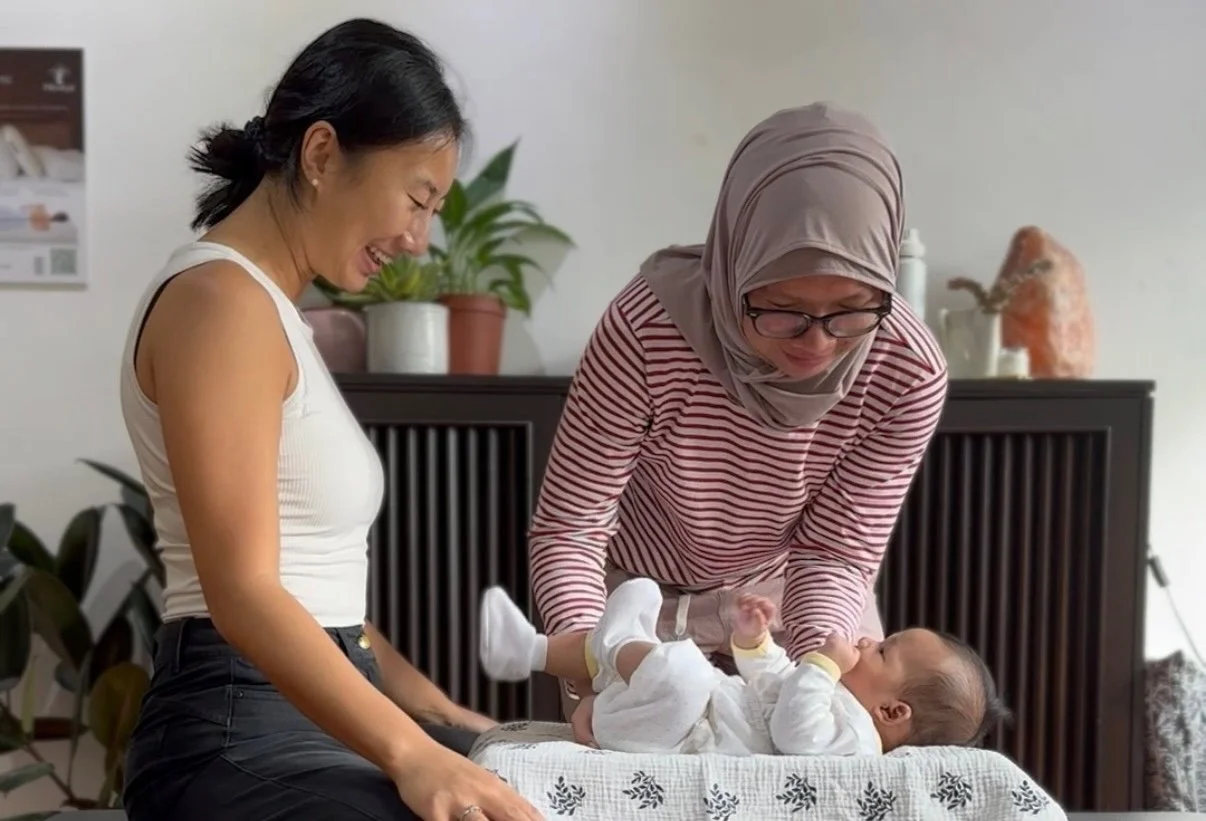
Parenthood changes your body in quiet ways.
Not always through pain or injury, but through repetition.
Through the way you stand while rocking your baby.
The way you lean into the cot at night.
The way one hip slowly becomes your “default” side.
The way your shoulders round forward as your child grows heavier, but still wants to be held close.
Most parents and caregivers don’t think about alignment.
They think about sleep, feeding, school drop-offs, work deadlines, and how to make it through the day with some patience left.
And yet, alignment quietly shapes how parents move, how they cope physically, and how present they can feel with their children.
This matters, not because parents need to “fix” their posture but because the way your body feels directly affects how you show up in your family.
Parenting Is a Full-Body Experience
Caring for a child is physical, even when it looks still.
Holding a newborn for long stretches.
Carrying a toddler through the MRT because they refuse to walk.
Bending into car seats.
Sitting cross-legged on the floor during play.
Standing in the kitchen with a baby on one hip while preparing meals.
In Singapore, this physical load is often layered with:
Long working hours
Limited personal space
Heat and humidity
Helper schedules
School routines
Less time to rest and reset
Over time, the body adapts.
These adaptations are not mistakes, they are survival strategies.
But when the body stays in adaptation mode for too long, it can begin to feel strained, tired, or disconnected.
This is where alignment becomes important.
What Alignment Really Means
Alignment is not about standing straight or “correcting posture.”
It’s about how easily your body can move, carry load, and respond without strain.
When alignment is supported:
Weight distributes more evenly
Muscles don’t need to grip constantly
Breathing feels fuller
Movement feels smoother
When alignment is under strain:
One side of the body works harder
Certain muscles stay tense
The nervous system remains on alert
Fatigue builds more quickly
Many parents and caregivers don’t notice this until they realise: “I’m exhausted, even when I haven’t done much today.”
That exhaustion often isn’t from doing too much, it’s from the body working inefficiently.
How Alignment Affects the Way You Hold Your Child
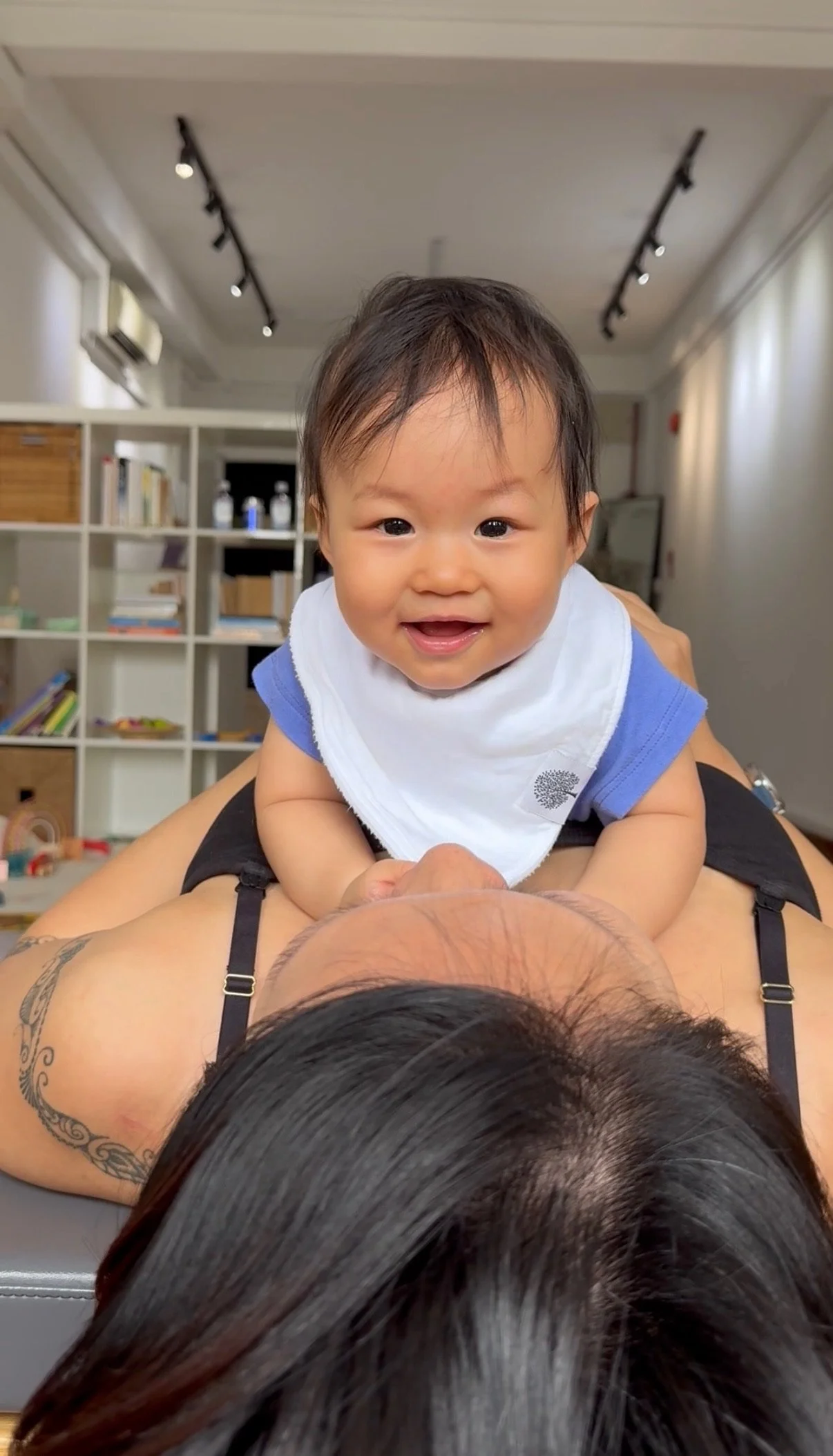
Holding a child seems instinctive, and admittedly it is.
But the way you hold is influenced by how your spine, shoulders, and pelvis are functioning.
When alignment is supported, holding tends to feel:
More relaxed
More balanced
Less effortful
When alignment is strained, holding can feel:
Heavy on one side
Tight through the shoulders or neck
Draining rather than grounding
Babies and children feel this through your body.
They sense:
Muscle tension
Breathing patterns
Movement rhythm
This is part of co-regulation, the process by which a child’s nervous system responds to the caregiver’s nervous system.
Your body becomes the environment your child settles into.
Co-Regulation Starts With How Supported You Feel
Co-regulation isn’t something parents need to consciously do.
It happens naturally when a caregiver’s nervous system feels steady and supported.
A supported body tends to move more slowly.
Breathing becomes calmer.
Touch feels softer.
Reactions feel less rushed.
When the body is under strain, the nervous system may shift into a more protective state.
This can show up as:
Feeling easily overwhelmed
Less patience during play
A sense of being “on edge”
Wanting space sooner
This doesn’t mean you’re doing anything wrong.
It means your nervous system may need support.
Alignment plays a role here because it reduces unnecessary physical effort, allowing the nervous system to settle more easily.
Carrying Patterns and Everyday Family Life
Most parents have a preferred carrying side.
One hip that feels easier. One arm that naturally takes the load.
Over time, this can create:
Pelvic imbalance
Shoulder tension
Spinal rotation
Uneven muscle use
Again, this is not a problem, it’s a PATTERN.
But when these patterns build without support, they can affect how long a parent can comfortably carry, play, or stay present.
In family dynamics, this matters more than we realise.
Physical discomfort often leads to emotional fatigue.
And emotional fatigue shapes how families interact.
Play Is Where Alignment Becomes Most Obvious
Play often involves getting up and down from the floor repeatedly.
Rolling.
Reaching.
Crawling.
Sitting cross-legged.
Standing again.
When alignment is supported:
Movement feels easier
Transitions are smoother
Play lasts longer
When alignment is strained:
Getting up feels effortful
The body braces before moving
Play ends sooner
Children don’t need long play sessions — they need presence.
And presence is easier when the body isn’t under constant strain.
The Postpartum Body Doesn’t “Go Back”
Many parents, especially mothers, are told their body will return to normal after birth.
In reality, the body reorganises.
The pelvis changes. The rib cage shifts. The spine adapts.
Breathing patterns adjust.
These changes don’t automatically resolve after six weeks or even six months.
Add feeding positions, carrying, and interrupted sleep, and the nervous system may remain in a state of constant adaptation.
This is why many parents feel “off” even years after giving birth.
Chiropractic care for parents and caregivers during this stage is not about correcting the body, it’s about helping it integrate these changes more efficiently.
Alignment and Emotional Availability
Often, physical strain shows up emotionally before it becomes pain.
Less patience. More irritability. Feeling touched-out. Wanting to withdraw.
This isn’t about resilience or mindset.
It’s about capacity.
When the body is constantly working harder than it needs to, emotional availability decreases.
When alignment improves, parents often notice:
More patience
Better tolerance for noise and movement
Easier transitions between tasks
Small physical shifts can create meaningful emotional changes.
What Chiropractic Care for Parents Looks Like
At Purely Family Chiropractic, care for parents and caregivers focuses on the nervous system.
Adjustments are precise and tailored.
They aim to reduce interference, improve communication between the brain and body, and support more efficient movement.
This care is not forceful. It is responsive and specific.
Many parents seek care because they want:
To move with less effort
To feel more present
To support their family without draining themselves
Supporting Parents Supports the Whole Family
When a parent feels supported in their body, changes ripple outward.
Holding feels easier.
Carrying feels lighter.
Play feels more enjoyable.
Connection feels steadier.
This is how alignment influences family dynamics: quietly, consistently, and deeply.
Not by changing how you parent, but by supporting how your body carries the role.
A Gentle Closing Thought
You are not meant to push through discomfort to be a good parent.
Your body matters in this relationship.
Alignment is not about doing more but about allowing support.
At Purely Family Chiropractic, we work with Singapore-based parents who want their bodies to feel as considered as the care they give.
Because when parents feel supported, families feel it too.
If you’d like to explore whether chiropractic care could support you and your family this season, book a session today.