Why Movement Matters for Development: Milestones Through the Lens of the Nervous System
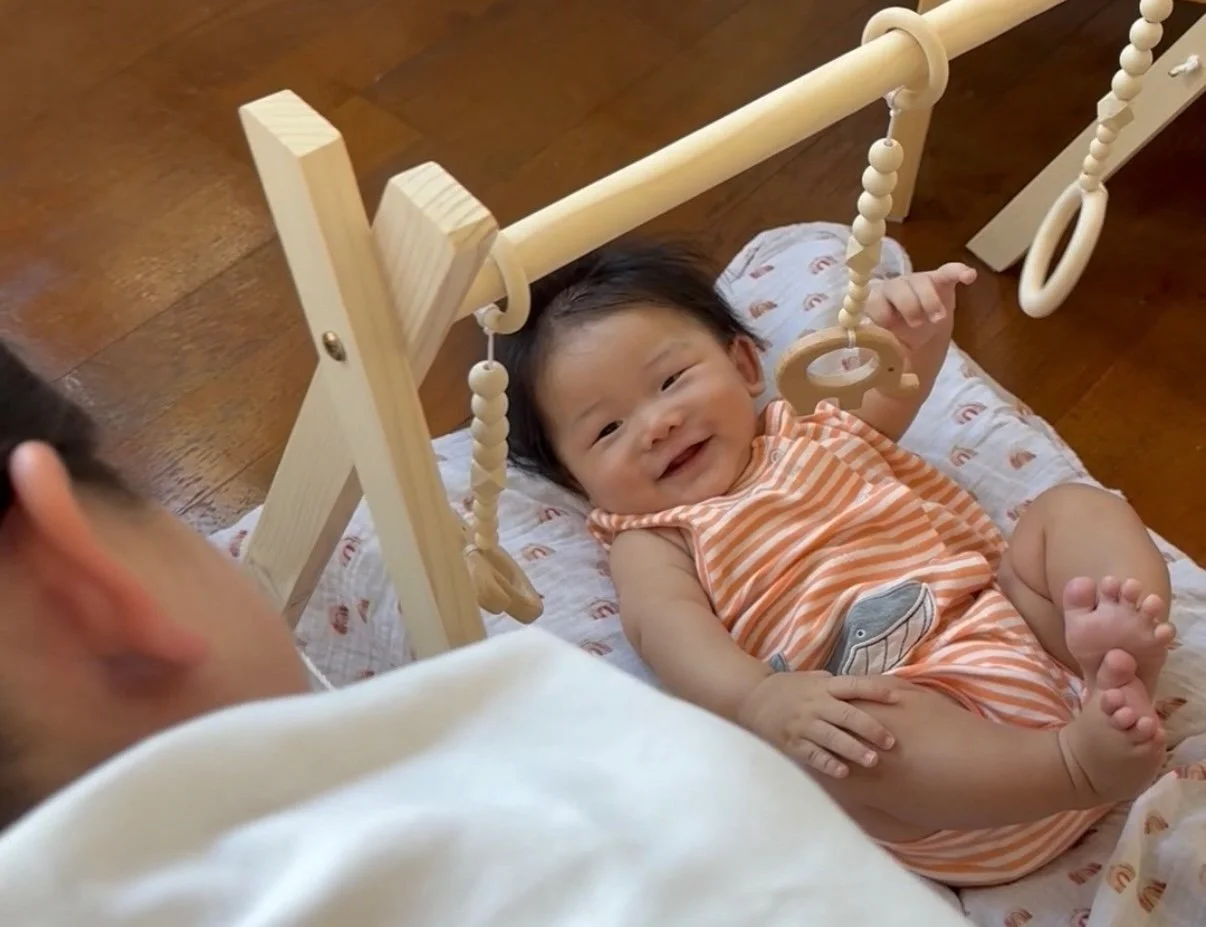
If you’re a new parent, chances are you’ve heard some version of this question more times than you can count:
“Are they rolling yet?”
“Sitting?”
“Crawling?”
“Walking?”
Developmental milestones have become a kind of quiet scoreboard of early life. Often well-intentioned, sometimes anxiety-inducing, they can leave parents wondering whether their baby is “on track,” “behind,” or doing something wrong.
As a female paediatric chiropractor who works closely with babies, children, and parents, I see milestones differently. Not as boxes to tick, but as expressions of how a child’s nervous system function is unfolding within their body, their environment, and their family dynamics.
Movement is not just about muscles and strength. It is one of the primary ways the nervous system develops, integrates, and learns how to relate to the world.
Let’s explore why movement matters so deeply, what milestones are really telling us, and how to support development in a way that feels grounded, respectful, and aligned with physiology.
The nervous system: the real driver of development
Before we talk about milestones, we need to talk about how the nervous system functions.
From the moment your baby is conceived, their nervous system is forming the blueprint for everything that follows: posture, coordination, digestion, emotional regulation, attention, and sleep.
The nervous system is not separate from movement. Movement is one of its primary languages.
Every time your baby turns their head, lifts an arm, pushes into the floor, or rolls their body, sensory information travels from the body to the brain and back again. These loops of communication shape:
Body awareness
Balance and coordination
Spatial orientation
Muscle tone
Timing and sequencing
A sense of safety within the body
This is why nervous system function is central to development. When communication between brain and body is clear and adaptable, movement unfolds with more ease.
Milestones are reflections, not instructions
Milestones are often presented as goals to achieve by a certain age. In reality, they are reflections of internal organisation.
A baby doesn’t roll because they’re “meant to” at four months. They roll because:
Their nervous system can coordinate flexion and extension
Their body senses the floor and gravity
Their spine and joints move freely enough to allow rotation
Their muscles respond in a balanced way
Milestones emerge when the system is ready, not when we push it.
From a chiropractic perspective, delays or asymmetries are rarely about laziness or lack of effort. They are often about how the nervous system is processing information and how the body is responding to it.
Movement begins long before birth
Development does not start at delivery.
In utero, movement is already shaping the nervous system:
Kicking against the uterine wall builds proprioception
Turning and stretching influence spinal development
Responding to maternal movement helps organise balance systems
Birth itself is a profound neurological event. Whether fast or slow, medicated or unmedicated, vaginal or surgical, it places stress and compression through the spine and nervous system.
This doesn’t mean something has gone wrong. It simply means that some babies begin life with more tension or asymmetry than others, which can influence how freely movement develops later on.
Tummy time: more than a trend
Tummy time has become a buzzword, often delivered with pressure.
But at its core, tummy time is about giving the nervous system access to gravity, resistance, and sensory input through the front of the body.
When a baby lies on their tummy, they:
Activate postural muscles
Learn to lift and turn the head
Develop shoulder stability
Build spinal extension
Strengthen the connection between upper and lower body
What matters most is quality, not duration.
A baby who tolerates only short periods on their tummy may not be resisting development, they may be communicating discomfort, fatigue, or sensory overload.
Supporting nervous system regulation first often changes how movement feels for them.
Rolling: the first expression of coordination
Rolling is one of the earliest milestones that involves true whole-body coordination.
It requires:
Head control
Trunk rotation
Cross-body communication
Integration of visual and vestibular input
When rolling is skipped, delayed, or consistently one-sided, it can tell us something about asymmetry in the nervous system or body.
From a family chiropractic lens, we look at:
Spinal mobility
Tension patterns through the neck and ribs
How the nervous system is organising rotation
Rather than forcing the movement, we ask: What might be getting in the way?
Sitting: stability before independence
Independent sitting is often celebrated as a sign of readiness. But sitting well requires much more than core strength.
It reflects:
Balanced muscle tone
Upright spinal organisation
Clear communication between brain and pelvis
A nervous system that can stabilise without rigidity
When babies are placed into sitting before their system is ready, they may appear stable but lack true internal organisation.
Allowing sitting to emerge naturally supports long-term posture and coordination.
Crawling: a neurological masterpiece
Crawling is one of the most neurologically rich phases of development.
It integrates:
Left and right brain hemispheres
Upper and lower body coordination
Visual tracking
Balance and depth perception
Some babies crawl traditionally, others scoot, roll, or find creative alternatives. Variety is normal.
What we pay attention to is not how they move, but whether movement looks adaptable, symmetrical, and connected.
Crawling plays a significant role in how children later relate to reading, writing, and sustained attention, all functions deeply tied to nervous system function.
Walking: not the finish line
Walking often feels like the grand finale of early development. In reality, it is just one transition.
Walking well requires:
Integrated balance systems
Coordinated spinal movement
Confidence in weight-bearing
A nervous system comfortable with upright posture
Early walking is not always a sign of advanced development. Late walking is not always a concern.
What matters is how supported the system feels in gravity.
The role of family dynamics in movement
Development does not happen in isolation.
A baby’s nervous system is constantly responding to their environment such as the tone of voice, pace of life, parental stress, rhythm, and connection.
In healthy family dynamics, caregivers intuitively adjust:
Slowing down when the baby is overwhelmed
Offering support without pressure
Allowing rest between bursts of activity
Movement flourishes when a baby feels safe, seen, and supported, not rushed.
When movement feels hard
Parents often sense when something feels off, even if milestones are technically being met.
Signs worth exploring include:
Strong preference for one side
Stiffness or floppiness
Avoidance of certain positions
Frequent frustration during movement
Difficulty settling after activity
These are not diagnoses. They are invitations to look more closely at how the nervous system and body are working together.
How paediatric chiropractic care supports development
As a female paediatric chiropractor in Singapore, my role is not to teach babies how to move, but to support the conditions that allow movement to emerge with ease.
Care focuses on:
Supporting spinal and joint mobility
Reducing tension patterns
Enhancing communication between brain and body
Helping the nervous system adapt to growth and gravity
When the system feels clearer and more balanced, movement often becomes more fluid without forcing or training.
Reframing milestones with compassion
Milestones are guides, not verdicts.
They offer insight into how a child’s nervous system is organising itself within their body and their world.
When we shift from “Is my baby on track?” to “How is my baby adapting?”, something softens.
Development becomes less about comparison and more about connection.
A note to parents
If you are watching your baby move — stretch, struggle, pause, try again — know that this is learning in its purest form.
Your presence, patience, and trust matter just as much as any milestone chart.
Movement is not a race.
Development is not linear.
And your baby is not behind for being exactly where they are.
At Purely Family Chiropractic, we take a nervous-system-led approach to infant and child development. Care is tailored, precise, and rooted in deep respect for each family’s rhythm.
If you’re curious about how your child’s movement reflects their nervous system function, or how chiropractic care for babies and children may support their development within your family dynamics, this is a conversation I’m always happy to hold.