Sleep, Settling and the Newborn Nervous System: What’s Actually Happening Behind the Scenes
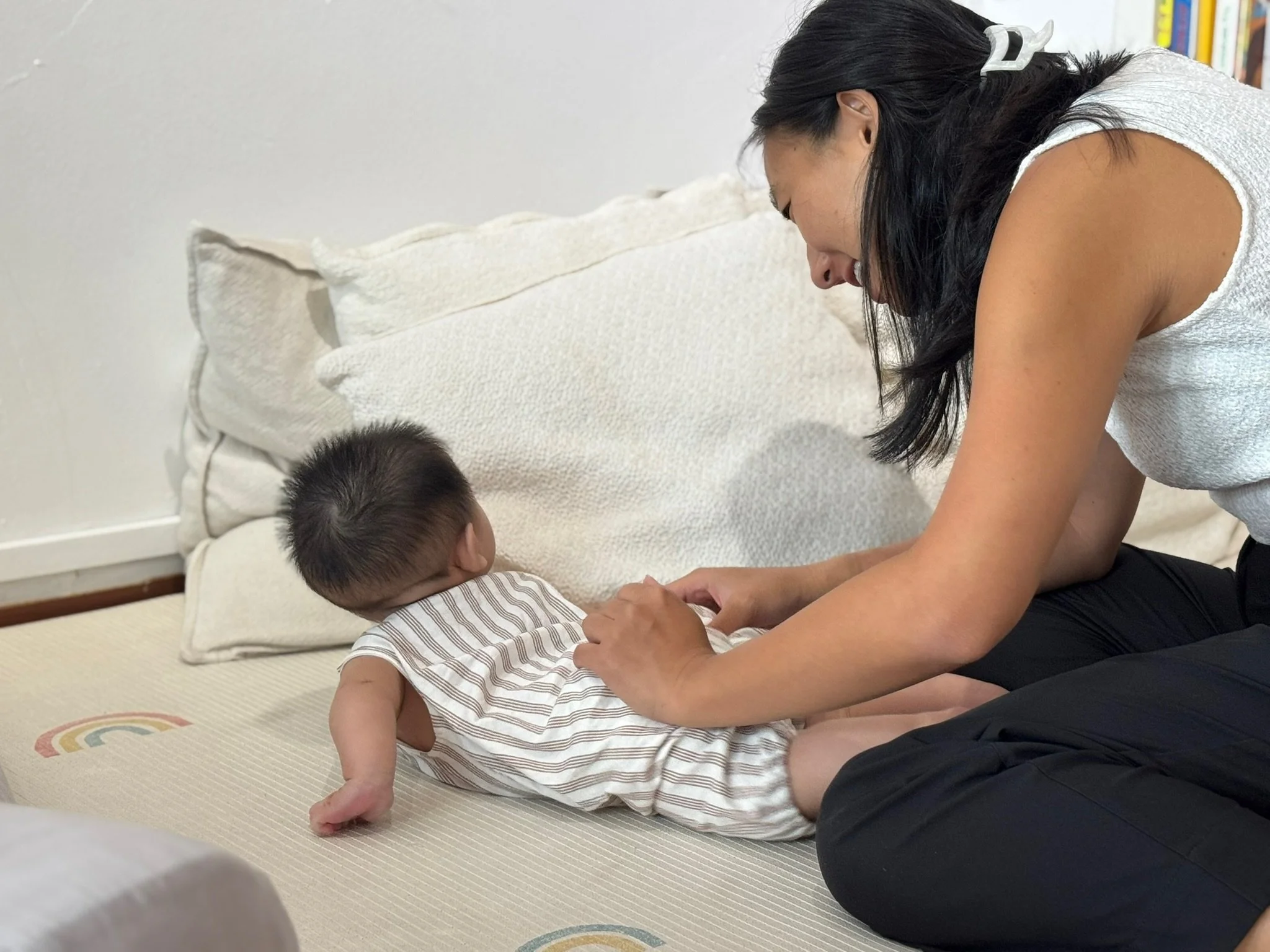
If you’re a new parent, chances are sleep has become the quiet centre of your world.
Or perhaps the loud one.
The night wakings, the short naps, the baby who only settles in arms.
As a chiropractor in Singapore, I understand how it can feel personal, confusing, and at times deeply exhausting. Yet much of what we see in early infancy isn’t a problem to be fixed, but a nervous system learning how to live outside the womb.
Let’s gently unpack what’s actually happening behind the scenes.
The Newborn Nervous System: Brand New to the World
Your baby arrives with a nervous system that is beautifully immature.
For nine months, regulation happened for them, through you. Warmth, rhythm, movement, breath, and sound were steady and predictable.
Birth changes everything.
Suddenly, the nervous system must begin to make sense of light, gravity, noise, digestion, temperature, and touch. This integration is gradual. It unfolds over weeks and months, not days.
Sleep and settling are not skills a newborn needs to learn; they are expressions of nervous system function. When a baby struggles to settle or stay asleep, it often reflects a system still learning safety, rhythm, and ease in a very new environment.
Imagine waking up one morning to start work in a completely unfamiliar place: new location, new colleagues new boss, new expectations, no orientation. Even as an adult, your nervous system would feel alert, unsettled, perhaps overwhelmed.
For a newborn, this is everyday life.
Why Sleep Looks So Fragmented Early On
From a neurological perspective, newborn sleep is meant to be light and cyclical. Frequent waking supports feeding, growth, and connection - all essential for survival.
What can make sleep feel more challenging are factors such as:
Birth stress or prolonged labour
Tension through the spine or diaphragm
Digestive discomfort
Sensory overload
A nervous system leaning more toward “alert” than “rest”
None of these mean something is wrong. They simply tell us the system may need more support.
Settling Is Co-regulation, Not Independence
A baby doesn’t self-soothe, they co-regulate.
Rocking, holding, feeding, skin-to-skin contact and familiar voices all help the nervous system move toward a parasympathetic (rest-oriented) state. This is not habit-forming; it is foundational.
In the context of family dynamics, how caregivers respond during these early months shapes a baby’s sense of safety. When a baby feels supported, their nervous system gradually learns how to settle with more ease.
Where Paediatric Chiropractic Care Can Support
As a female paediatric chiropractor, my role is not to “train” babies to sleep, but to assess how their nervous system and body are adapting to early life.
Gentle, precise care focuses on:
Reducing unnecessary tension
Supporting spinal and cranial movement
Enhancing communication between brain and body
Creating conditions for regulation, digestion, and rest
When the nervous system feels safer, sleep often follows naturally. Not perfectly, but more rhythmically.
A Note For Parents
If you’re reading this at 3am, holding a baby who won’t settle, know this:
You are not doing anything wrong.
Your baby isn’t giving you a hard time. They’re having a hard time.
Sleep in infancy is not a reflection of parenting success. It is a window into development, connection, and nervous system maturation.
Support the system, and the system will find its way.
If you’re curious about how your baby’s nervous system is adapting, or how to support sleep in a way that feels aligned, respectful, and grounded in physiology, this is a conversation I’m always happy to hold.
Quietly. Thoughtfully. Together.