Most people give more thought to their pillow after a bad night's sleep than at any other time. A stiff neck, a dull headache that starts somewhere behind the eyes, that particular kind of tiredness that a full night's sleep should have fixed but didn't. Often, the pillow is the last thing anyone checks, and usually the first thing that needs replacing.
It's a small object to have overlooked for so long, considering how many hours a night it's asked to do its job.
What a Pillow Is Actually For
A pillow has one real function. It fills the gap between the head, the neck, and the mattress, so that the spine can stay in a neutral position for the hours you're not moving to adjust it yourself. That's a simple description for something that gets complicated quickly once sleep position, shoulder width, and mattress firmness all come into play, but the underlying job never changes.
When a pillow does this well, the neck stays roughly level with the rest of the spine, whether you're lying on your back or your side. When it doesn't, either too high or too flat for how you actually sleep, the neck spends the night held slightly out of line, and the muscles around it work harder than they should to compensate. That's often where morning stiffness comes from, long before anyone thinks to blame the pillow itself.
What We Look At Differently
It's worth being clear about where a pillow's job ends and where ours begins, because the two aren't the same thing, even though they're closely related.
Our work is with the body while it's awake, and while it's adapting. A chiropractic session looks at how the spine and nervous system are functioning through movement, posture, and daily use, and supports the body's own capacity to adjust and hold better posture through the day.
A pillow's job picks up from there. It doesn't create that alignment. It translates it into sleep, holding the position the body has already been working to establish, for the many hours a night when nothing else is holding it in place. A good pillow won't undo poor alignment, and a poorly chosen one can slowly work against progress made elsewhere, night after night, without anyone quite noticing why.
The two matter together. Neither replaces the other.
Finding the Right Pillow for You
Choosing a pillow well starts with knowing how you actually sleep, not how you'd like to sleep, or how you fell asleep last night, but the position your body settles into most nights.
Back sleepers generally need a slimmer pillow, one that supports the neck's natural curve without pushing the head forward. Side sleepers need considerably more loft, enough to fill the full distance between the ear and the shoulder, so the spine stays level rather than tilting down toward the mattress, but not too high so it shifts your head upwards. And stomach sleeping is just not recommended…
Shoulder width matters too, more than most people expect. Two people with the same sleep position can need noticeably different pillows depending on build alone, which is part of why a pillow chosen for someone else rarely works as well for you. If there is one take away from this read, it’s to try your pillow before you purchase.
This is where we're glad to point families toward Heveya, whose approach to pillows we appreciate for exactly this reason. Rather than treating a pillow as one size fits most, they work through sleep position, body type, and mattress firmness with each person individually, doing an in-person consultations to land on the right height and firmness rather than a guess. It's a thoughtful way to approach something so many people buy without ever really being asked the right questions first. If you're overdue for a pillow that actually fits how you sleep, come by for a visit, in person at their several outlets or at our chiropractic space, we carry all 6 different types!
What About Children? Babies Do Not Need a Pillow
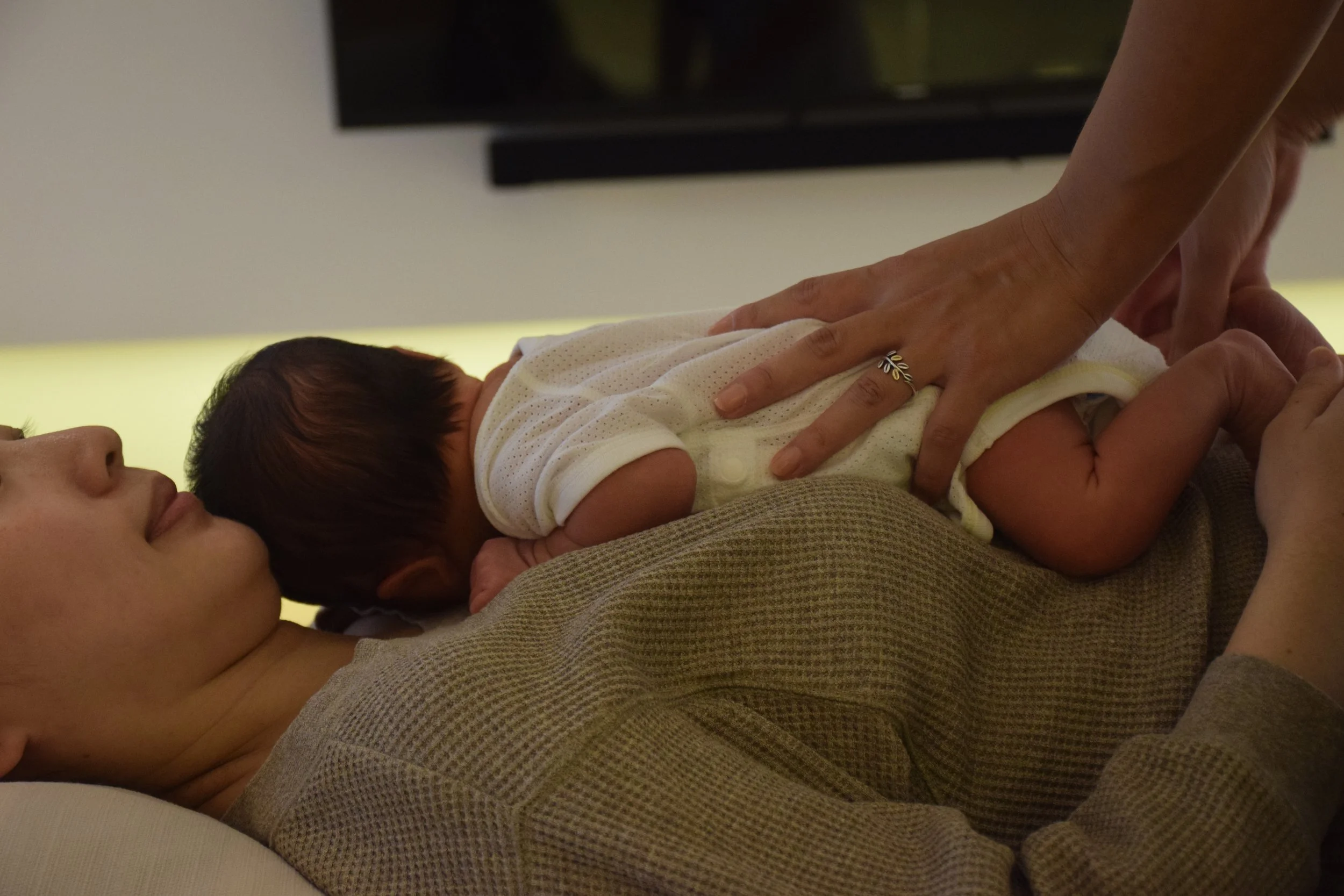
This is a question we're asked often enough that it's worth addressing directly. Babies do not need a pillow, and for the first year of life in particular, pillows and other soft bedding are best kept out of a baby's sleep space entirely, largely due to the increased risk of suffocation in very young infants who can't yet roll or reposition themselves easily.
That guidance doesn't shift quickly just because a baby grows into toddlerhood. Most pediatric guidance points to around two years of age before a pillow is appropriate, and even then, age alone isn't the whole picture. What matters more is whether a child has moved from a crib into a bed, and whether they're showing the physical readiness for it, enough neck and shoulder strength, and enough ability to move a pillow away from their face if needed, rather than simply being old enough on paper.
There's no benefit to introducing a pillow earlier than a child needs one. Most toddlers sleep perfectly well without one for longer than parents expect, and a flat, firm surface without extra bedding remains the safer choice until a child is genuinely ready for the transition. If you do introduce one, a small, firm, child-specific pillow is a better fit than an adult one scaled down, since a young child's proportions and neck strength are quite different from an adult's.
A pillow is a small thing to get right, and an easy thing to overlook for years at a time. But it's worth thinking about with the same care you'd give any part of your sleep, not as a decorative object, but as the one piece of your bedding whose entire job is to hold your spine steady while the rest of you rests.
For the adults in the family, that often means a proper, individually fitted pillow rather than whatever's been on the bed for the last five years. For the youngest members of the family, it more often means patience, and the understanding that no pillow at all is usually the right answer for longer than you'd think.
Purely Family Chiropractic is a boutique family chiropractic space along Joo Chiat Road, Singapore, supporting the nervous system through gentle, individualised care. We're glad to recommend Heveya (heveya.sg) to families looking for a pillow properly suited to how they sleep.