How your Child’s Posture Develops and Why It’s Important
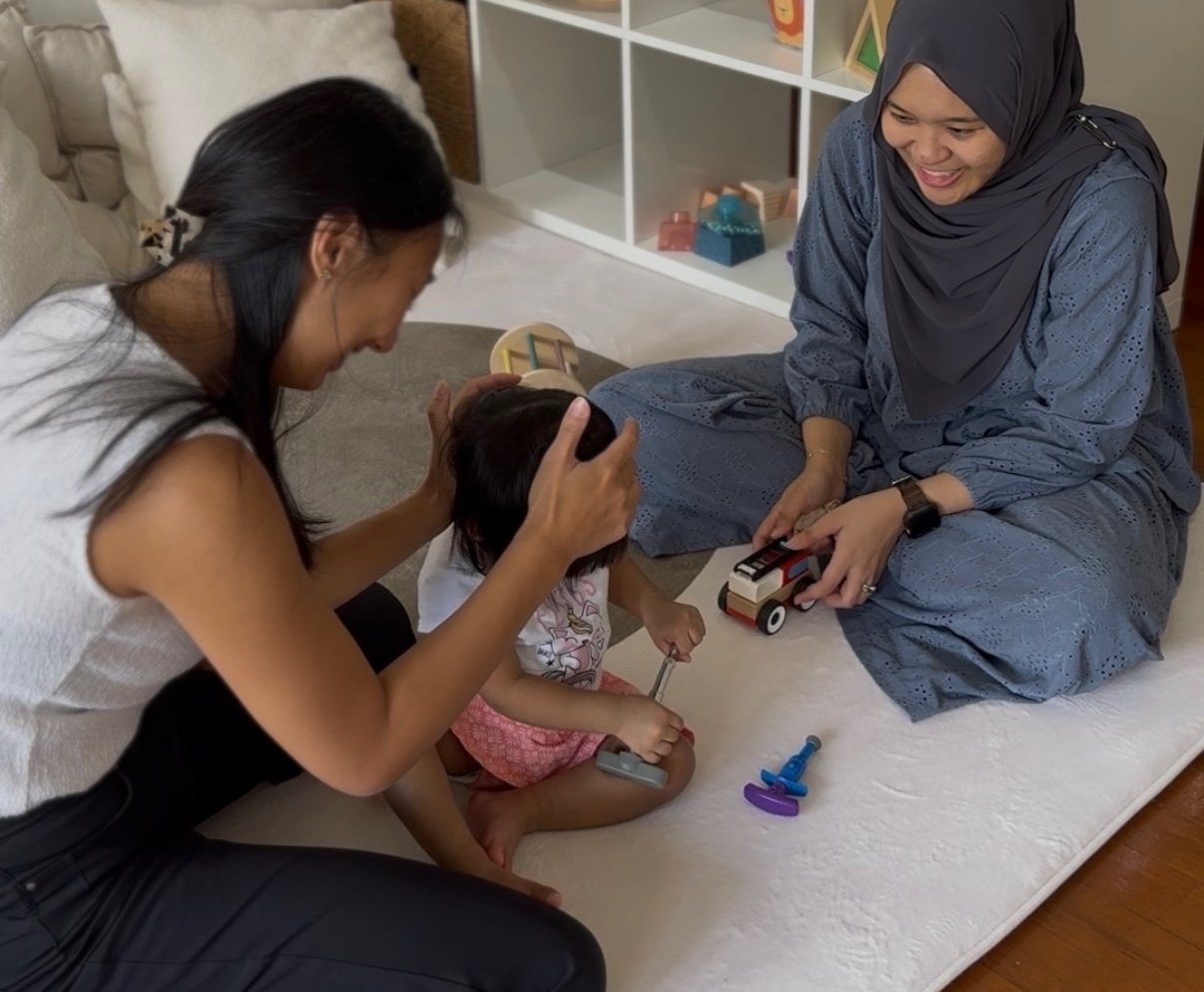
There is something quietly fascinating about how a child grows into their body.
It doesn’t happen all at once.
It unfolds in stages.
Layer by layer.
From tummy time… to rolling, crawling, sitting, and eventually walking - each phase is not just a milestone. It is a building block.
And within these building blocks, posture begins to take shape.
Not just how your child stands or sits.
But how their body adapts, compensates, and moves through the world.
Posture starts earlier than you think
When we hear the word “posture,” we often picture an older child (or even an adult) sitting at a desk, shoulders rounded, slightly hunching forward.
But posture doesn’t begin there.
It begins in infancy.
From the very first weeks of life, your baby is developing strength, coordination, and awareness through movement.
Each stage matters:
Tummy time builds neck and upper body strength
Rolling introduces coordination and spinal movement
Crawling develops cross-body patterns and stability
Sitting brings upright control
Walking integrates balance, strength, and spatial awareness
These are not just milestones to tick off.
They are the foundation of how your child’s posture will develop over time.
From tummy time to walking: a neurological journey
Postural development is not just muscular, it is neurological.
Your child’s nervous system is constantly gathering information:
Where is my body in space?
How do I shift my weight?
How do I stabilise and move at the same time?
Each movement (lifting the head, pushing through the arms, crawling across the floor) feeds this system.
This is why stages like crawling are so important.
They are not simply transitional.
They organise the brain and body to work together.
When a child moves through these stages with ease and variation, posture tends to develop more naturally and efficiently.
What happens when there is disruption?
Not every child follows the exact same path, and that’s okay.
But sometimes, certain patterns can influence how posture develops.
For example:
Skipping or shortening stages (like limited tummy time or crawling)
Favouring one side consistently
Spending extended time in containers (car seats, bouncers, strollers)
Early or prolonged sitting without adequate strength
When this happens, the body adapts.
And this is where the concept of compensation and adaptation becomes important.
Compensation: the body’s way of coping
The body is incredibly intelligent.
If it cannot move one way, it will find another.
This is compensation.
For example:
If a baby has difficulty turning their head to one side, they may consistently favour the other
If core strength is lacking, a child may slump or lean when sitting
If stability is limited, movement patterns may become less efficient
These adaptations allow the child to function.
But over time, they can influence posture.
Understanding postural deviation
A postural deviation isn’t simply a shift away from balanced, it’s a neurological change.
In children, this might look like:
One shoulder slightly higher than the other
A preference to lean or sit asymmetrically
Early signs of hunching, especially during sitting or screen time
Uneven weight distribution when standing or walking
They are signals of how the body is organising itself based on our habits.
And often, they reflect patterns that have developed over time.
Why posture matters (beyond appearance)
Posture is often associated with how we look.
But for children, it goes much deeper.
Posture influences:
1. Movement efficiency
A well-organised body moves with less effort.
When posture is balanced, children can run, climb, and play more freely.
When there are compensations, movement may require more energy, or feel less fluid.
2. Breathing
The position of the spine and ribcage affects how the lungs expand.
A child who is consistently hunching may have less optimal breathing patterns over time.
3. Nervous system function
Posture and the nervous system are closely connected.
The spine houses and protects the nervous system, which coordinates every function in the body.
When posture is more balanced, the body can adapt more smoothly to daily demands.
4. Long-term patterns
Children don’t “grow out” of posture.
They grow into it.
Patterns established early (whether balanced or compensatory) can carry forward into adolescence and adulthood.
The modern environment and posture
Today’s environment introduces new challenges.
More sitting.
More screens.
Less varied movement.
Even at a young age, children may spend extended periods in positions that encourage hunching or reduced movement variability.
This doesn’t mean something is wrong.
But it does mean we need to be more intentional about supporting movement and posture.
Supporting healthy postural development
The goal is not perfection.
It is variety, awareness, and support.
Encourage movement on the floor
Floor time allows babies to explore movement freely.
Rolling, pivoting, crawling. These build strength and coordination naturally.
Avoid rushing milestones
There is no need to “train” a baby to sit or walk early.
When children move into these stages on their own, their body is usually more prepared.
What is important is for them not to skip a milestones. In other words, the order in which they move is what matters.
Offer different positions
Alternate how your child sits, plays, and rests.
Variation prevents the body from becoming locked into one pattern.
Be mindful of screen time
For older children, prolonged sitting and screen use can encourage hunching.
Gentle reminders, movement breaks, and ergonomic setups can make a difference.
Where chiropractic care fits in
At Purely Family Chiropractic, we look at posture through the lens of the nervous system and movement patterns.
Rather than focusing only on how posture looks, we explore how the body is functioning.
Are there areas of tension?
Is the body adapting evenly?
Is the nervous system able to coordinate movement efficiently?
Gentle, specific chiropractic care is designed to support:
Better awareness within the body
More balanced movement patterns
The ability to adapt without excessive compensation
For babies and children, this approach is always adapted to their stage of development - subtle, precise, and respectful.
A different way to see posture
Posture is not something to “fix.”
It is something that develops over time, shaped by movement, experience, and adaptation.
When we understand this, we shift our focus:
From correction → to support
From appearance → to function
From control → to guidance
From tummy time to rolling, crawling, sitting, and walking, your child is building the foundation of their posture every day.
Within that journey, there may be moments of compensation and adaptation.
There may be small postural deviations.
There may be phases of hunching.
These are not failures.
They are part of a dynamic, evolving system.
And with the right awareness and support, the body often finds its way back toward balance.
Because at its core, posture is not about standing perfectly still.
It is about moving through life with ease.
Reach out or book an initial assessment.