Why Postpartum Back Braces Aren’t the Long-Term Solution
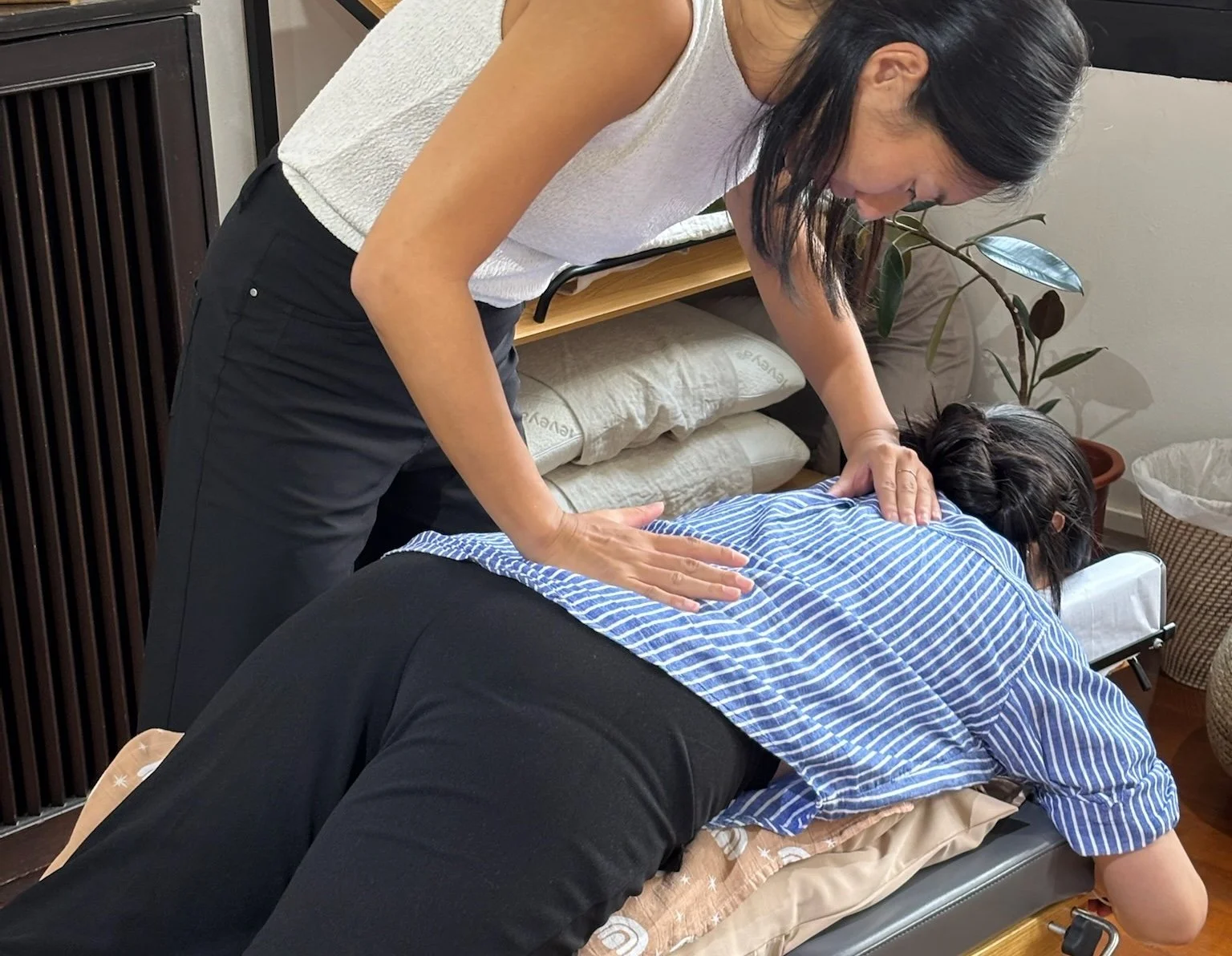
After birth, the body feels different.
For many mothers, there is a quiet awareness of the lower back sometimes aching, sometimes unstable, sometimes just not quite “held” the way it used to be.
In this space of recovery and adjustment, postpartum back braces often feel like an easy answer.
Something supportive. Something stabilising. Something that helps you “get through the day.”
And for a short period, they can feel useful.
But here’s the important question:
Are they actually helping your body rebuild or simply helping it cope?
What a postpartum back brace actually does
A postpartum back brace provides external support to the abdominal and lower back region.
It can:
Reduce the sensation of instability
Offer temporary postural support
Help you feel more “held” during movement
Provide short-term relief from discomfort
And in the early postpartum phase, when everything feels stretched and fatigued, this can feel like a relief.
But there is a key limitation.
A brace supports you instead of your muscles.
Which means the deeper systems responsible for stability may become less active over time.
The postpartum body is not broken, it is adapting
Postpartum is not a return to “normal.”
It is a recalibration.
During pregnancy, your body has spent months adapting:
Ligaments soften under hormonal influence
The ribcage expands
The pelvis adjusts
The abdominal wall lengthens
The centre of gravity shifts forward
After birth, your body does not instantly revert.
It has to reorganise.
This is where post partum chiropractic care becomes relevant, not as a quick fix, but as a way to support the nervous system and musculoskeletal system as they find new balance.
Why relying on a brace long-term can limit recovery
A back brace is external stability.
But your body is designed for internal stability.
When a brace is used for prolonged periods, a few things may happen:
1. Reduced core engagement
The deeper stabilising muscles, especially the transverse abdominis and pelvic floor, may become less active when external support is always present.
Over time, this can slow down the natural process of rebuilding body and core strength.
2. Dependence on external support
Instead of retraining internal stability, the body can begin to rely on the brace for “holding.”
This does not encourage long-term resilience.
3. Limited feedback to the nervous system
Your nervous system learns through movement and load.
If external support is doing much of the stabilising, the body receives less information about how to coordinate and adapt.
Postpartum back pain is often more than just “weakness”
Lower back discomfort after birth is rarely just about strength.
It is often a combination of:
Changes in pelvic alignment
Abdominal separation and load distribution
Fatigue and reduced recovery time
Nervous system overload
Movement compensations developed during pregnancy
This is why simply “supporting the area” externally may not resolve the underlying pattern.
What does real recovery look like?
True postpartum recovery is not about holding the body together.
It is about helping it reorganise.
This is where post partum chiropractic care can play a supportive role.
At Purely Family Chiropractic, we focus on:
Nervous system regulation
Pelvic and spinal balance
Reducing compensatory movement patterns
Supporting functional core engagement
The goal is not to replace a brace with “nothing.”
It is to help your body regain its own internal support system.
So you no longer need external holding to feel stable.
A real experience from a mother
One mother shared her experience after struggling with significant postpartum lower back discomfort:
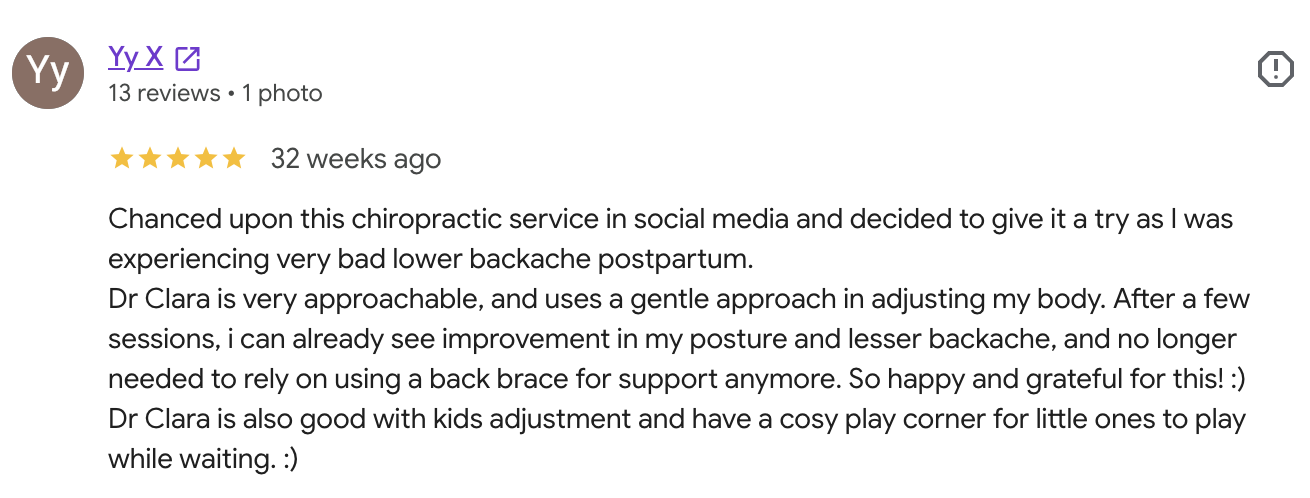
This reflects something we see often in practice:
When the body begins to reorganise and move more efficiently, external supports naturally become less necessary.
Not because they are “replaced,” but because they are no longer needed.
Rebuilding body and core: what it actually means
When we talk about rebuild body and core, we are not referring only to abdominal exercises.
We are referring to a deeper integration process:
1. Restoring pelvic stability
The pelvis is the foundation of postpartum movement.
When it is balanced, load distribution through the spine improves.
2. Reconnecting the core system
Core function is not just abdominal strength.
It is coordination between breath, diaphragm, pelvic floor, and deep abdominal muscles.
3. Supporting the nervous system
The nervous system coordinates every muscular response.
If it is under stress or dysregulated, the body may remain in protective or compensatory patterns.
4. Rebuilding movement confidence
Many mothers unknowingly change how they move after birth guarding, bracing, or avoiding certain motions.
Restoring ease of movement is part of recovery.
Why gentle chiropractic care can support this process
Chiropractic care does not “force” change.
Instead, it works with the body’s natural capacity to adapt.
Through gentle and specific adjustments, we aim to support:
Better communication within the nervous system
Reduced muscular guarding
Improved spinal and pelvic motion
A more balanced distribution of load
This can create the conditions for the body to start trusting its own internal support again.
A shift in perspective
A postpartum back brace is not “bad.”
It has its place, especially in the very early stages when temporary support can provide comfort.
But long-term reliance can sometimes delay the deeper process of recovery.
The goal is not external stability forever.
It is internal stability returning.
Let’s get stronger
Postpartum recovery is not about rushing back to how things were before.
It is about helping your body become strong in a new way.
One that is not dependent on external support.
One that is integrated, responsive, and resilient.
If you are experiencing lower back discomfort postpartum, there is a path beyond bracing.
A path that focuses on post partum chiropractic care, nervous system support, and the gradual process of rebuilding body and core from within.
Because your body is not something to hold together.
It is something that, with the right support, knows how to come back together.
Reach out or book an initial assessment.