Why Babies Arch, Twist, or Strain: Understanding the Little Signs Their Nervous System Gives Us
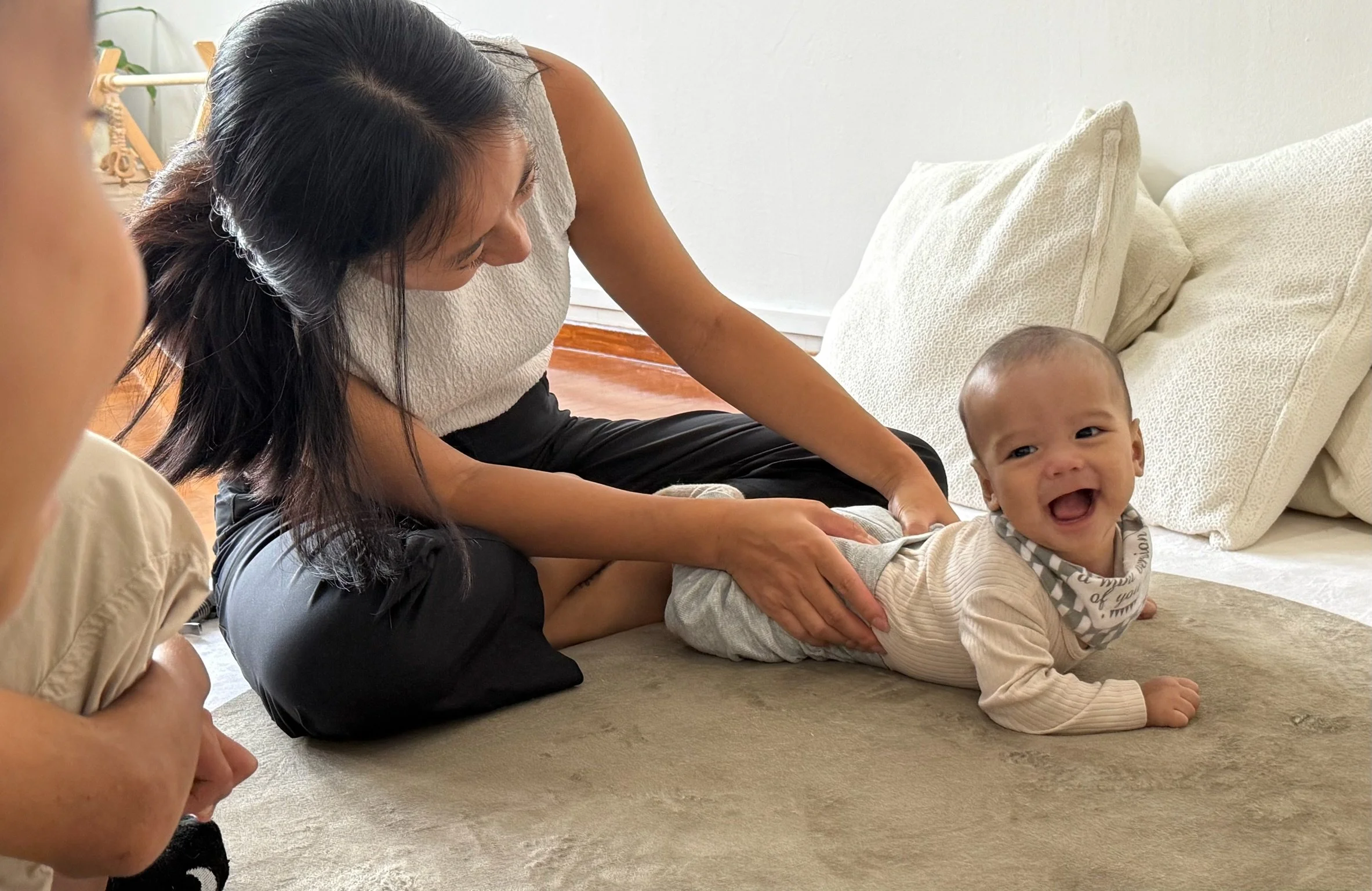
As a parent, it’s common to feel concerned when your baby suddenly arches their back, twists to the side, or strains during feeding, play, or sleep.
Sometimes it feels like your baby is uncomfortable, sometimes it feels almost “mechanical,” like their body is moving on its own.
But these movements are often tiny signals from your baby’s nervous system, telling you how they’re managing life in these first months.
In this article, we’ll explore why babies show these signs, what they might indicate about their nervous system function, and how specialised chiropractic care for newborns and babies can help support their development.
The Body’s Language: Understanding Baby Movements
Babies communicate primarily through movement and crying. While it’s tempting to label certain actions as “problematic,” it’s more accurate to view them as expressions of how their bodies are adapting to the world.
When you notice arching, twisting, or straining, it can reflect several things:
Muscle tone differences: Some babies have naturally higher body tone, meaning their muscles are slightly more contracted even at rest.
Nervous system cues: The body uses movement to respond to stress, discomfort, or stimulation.
Developmental patterns: Babies are learning how to control their head, neck, and limbs - sometimes awkward movements are part of normal development.
Understanding the “why” behind these movements is the first step to supporting your baby’s comfort and development.
What Is High Body Tone?
High body tone, also called hypertonicity, refers to muscles being more contracted than usual. Babies with high tone may:
Arch their back during feeding or lying down
Stiffen their limbs
Twist or turn their head frequently
Struggle with stretching or extending fully
High body tone is not inherently dangerous, but it can influence how your baby interacts with the world.
For example, a baby with higher tone may find feeding more challenging because swallowing and breathing require relaxed muscles. Sleep may be disrupted because their body remains “on alert,” and movements may seem exaggerated.
High body tone is often a sign of the nervous system working overtimes as if the body is prepared for action even when it doesn’t need to be.
Sympathetic vs Parasympathetic Nervous System
To understand why babies arch or twist, it helps to know a little about the nervous system, which controls how the body reacts to its environment.
Sympathetic Nervous System (“fight or flight”): Activates the body in response to stress. Heart rate increases, muscles tighten, digestion slows, and the body is prepared to respond quickly.
Parasympathetic Nervous System (“rest and digest”): Helps the body relax, digest food, sleep, and regulate recovery.
In babies, these systems are still learning balance. When the sympathetic system dominates, it can show up as:
Back arching
Fist clenching
Leg and arm stiffening
Frequent startle reactions
Difficulty settling for sleep
Conversely, when the parasympathetic system is engaged, babies are usually calmer, can feed more efficiently, and sleep more soundly.
High body tone often reflects a nervous system leaning toward sympathetic dominance, meaning the body is “staying alert” more than necessary.
Common Scenarios You Might Notice
Here are some situations where you might see arching, twisting, or straining in babies:
1. During Feeding
Babies may arch or twist their body while feeding. This could be a result of:
Muscle tension making it harder to maintain a comfortable position
Difficulty coordinating sucking, swallowing, and breathing
A nervous system that is reacting to overstimulation or discomfort
Supporting their posture, using calm feeding routines, and gentle nervous system care can improve comfort.
2. During Tummy Time
Some babies resist tummy time, twist to the side, or lift their legs and arch their back. High body tone or nervous system overactivity can make this position feel challenging. Gentle, progressive tummy time and attention to nervous system regulation help babies gradually gain strength and tolerance.
3. During Sleep
Frequent twisting, arching, or stiffening in sleep may reflect sympathetic activation. Babies may wake more often or struggle to fall asleep. Ensuring a calm, safe sleep environment and supporting the nervous system can improve sleep patterns over time.
4. During Everyday Movements
Even when simply lying down or being held, babies with high body tone or nervous system sensitivity may:
Twist their head repeatedly
Arch their back
Push away from your chest with their legs
Show sudden jerky movements
Recognising these as nervous system cues rather than “misbehaviour” helps parents respond with understanding rather than frustration.
How Chiropractic Care Supports Your Baby
Specialised chiropractic care for newborns and babies focuses on supporting the nervous system and improving movement patterns.
Gentle, Safe Adjustments
Chiropractors trained in paediatric care use very gentle techniques. Adjustments are subtle and precise, helping the nervous system communicate more effectively without force.
Why It Matters
By supporting proper nervous system function, chiropractic care can:
Reduce high body tone
Improve posture and alignment
Support feeding and digestion
Promote restful sleep
Encourage smoother developmental milestones
Parents inSingapore often notice improvements not only in their baby’s movement but in their overall comfort and calmness.
The Family Impact
When babies struggle with high body tone or sympathetic dominance, it affects more than just the child. Sleep disruption, feeding difficulties, and fussiness can impact the whole family. By addressing these early through nervous system support, families often notice:
More predictable sleep patterns
Easier feeding routines
Less tension during holding or play
Greater confidence in parenting choices
Chiropractic care supports the family dynamic, helping parents feel more confident and connected.
When to Seek Help
It’s not always easy to know when arching, twisting, or straining signals a need for professional support. Consider reaching out if you notice:
Consistent high body tone that affects feeding, sleeping, or play
Arching or twisting that seems painful or persistent
Delayed or uneven developmental milestones
Frequent startle reactions or fussiness that doesn’t resolve with calming techniques
Early intervention can prevent tension from becoming a habit and supports healthy nervous system development from the start.
Supporting Your Baby at Home
In addition to professional care, there are gentle ways to support your baby’s nervous system at home:
Calm handling: Slow movements, soft voices, and skin-to-skin contact can help the parasympathetic system engage.
Tummy time and gentle stretching: Short, frequent sessions help build strength and flexibility without causing strain.
Rhythmic routines: Predictable feeding, sleeping, and play routines support nervous system balance.
Observation and responsiveness: Watching for cues like arching or twisting can guide adjustments in care, positioning, or interaction.
Combining these practices with specialised chiropractic care can enhance your baby’s comfort and development.
Why Joo Chiat and East Coast Singapore Parents Choose Us
Babies arching, twisting, or straining are not just random movements, they are tiny signals from their nervous system, showing how they experience the world. High body tone and sympathetic dominance can make everyday life challenging, but with early support, these patterns can be eased.
Specialised chiropractic care for newborns and babies offers a gentle, effective way to support your baby’s development, helping them move, feed, and sleep more comfortably while encouraging a calm, balanced nervous system.
At Purely Family Chiropractic, we work closely with families to provide expert, gentle care for babies, newborns, and children. Our approach is:
Specialised: Trained in paediatric chiropractic and nervous system support
Gentle and safe: Non-invasive adjustments suited for delicate bodies
Family-focused: Supporting not just the baby, but parents and caregivers in their journey
Families in Singapore trust us to guide them through the early months of their child’s life with personalised attention, expert advice, and compassionate care.
If you notice your baby frequently arching, twisting, or straining, don’t wait book a consultation at Purely Family Chiropractic in Joo Chiat / East Coast Singapore, book a session today.
Early care can set the stage for smoother development and a calmer, happier family life.